A stairway is perhaps the most used space in any building that creates an attractive look if decorated and designed accurately. Selection of the proper carpet and right installation create a great impact on the whole interior theme. A properly installed stair carpet creates a welcoming look and comfort that decreases foot noise levels.
But the process of stair carpet installation requires much greater precision than usual carpet installation in a regular room. Each step requires a complete care, such as edges, curves, and landscapes. If you decide to replace your old carpets or change your stairway completely, 8 stair carpet installation tips in this blog will be a worthy choice.
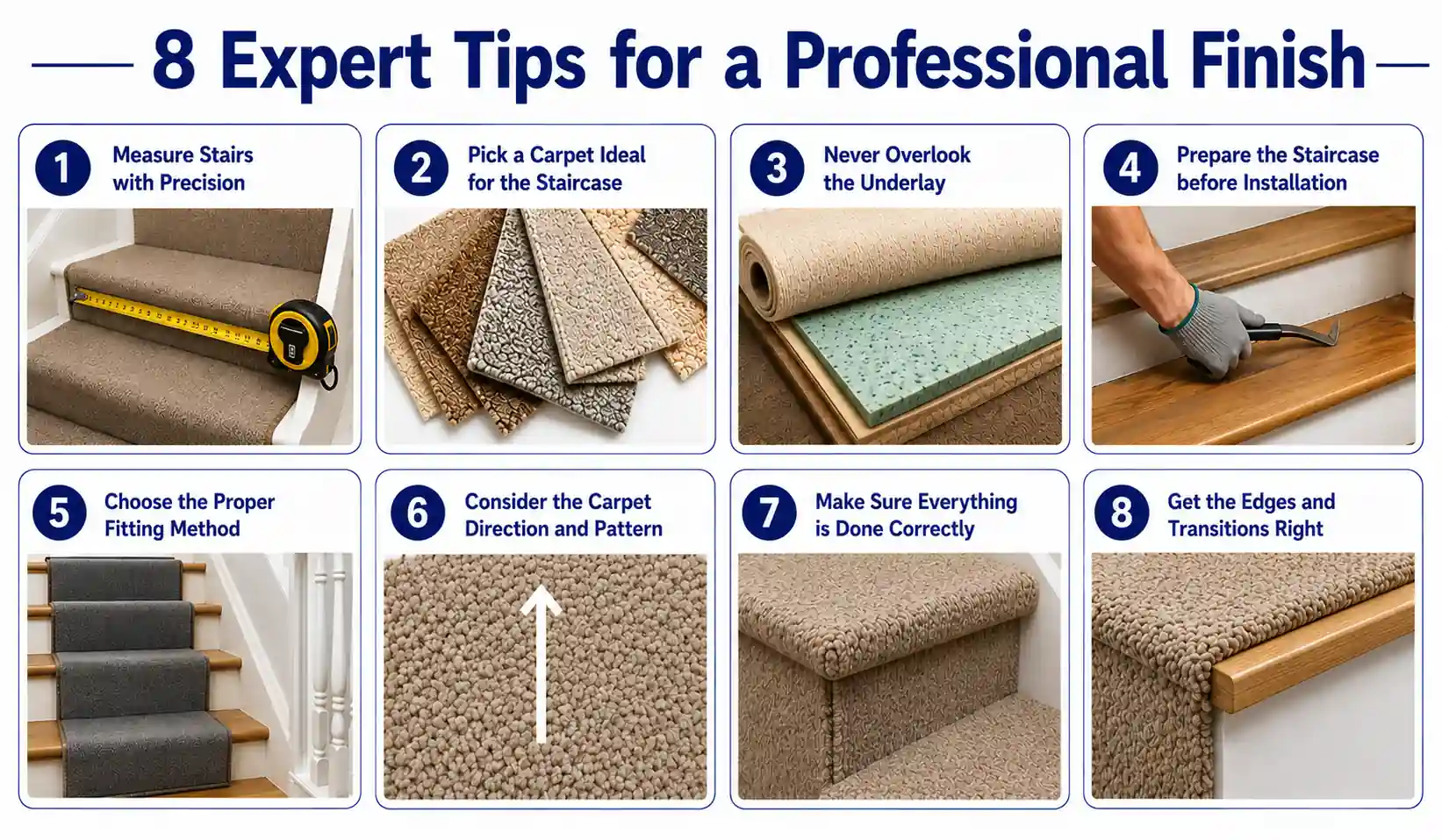
8 Expert Tips for a Professional Finish
If you require valuable stair carpet fixing without wrinkles and unevenness, then professional carpet installation provides satisfying results.
1. Measure Stairs with Precision
Measure tread and riser for each stair instead of using one measurement for the entire stairs. You should not forget about landings, turns, and other parts of the stairs.
Keeping some additional material for cutting or fitting purposes is another good idea. Otherwise, you might find yourself lacking something during the installation process.
2. Pick a Carpet Ideal for the Staircase
No two carpets are equally ideal for use in stairs. The stairs have high foot traffic; therefore, consider the aesthetic look of the carpet. There are various types of carpets, such as wool, nylon, polypropylene, and blended carpets, which you may use depending on your needs. These are features that make an ideal carpet for staircase use:
- Construction to withstand mostly use
- High wear and tear
- Pile height for installation in the staircase
- Comfortable to walk on
- Low maintenance
- Sufficient grip once installed
3. Never Overlook the Underlay
When installing stair carpeting, people view the underlay as an accessory which they can decide to buy or not buy. By having the right underlay in position, stepping on the carpet becomes soft, and people do not experience the pain of having to walk up and down the hard stairs.
The sound made by people walking up and down the stairs is minimized. When the underlay is too thick, it will not only be impossible for one to install the carpet, but even after installation, the carpet around the edges of the stairs will not remain flat.
4. Prepare the Staircase before Installation
Proper measurement ensures that there is no problem at all with placing the carpet and no problems that will arise in the future. There should be an inspection of the stairs and one should check whether there are any loose planks, swelling nails, damage or any problem at all.
Repair of the stairs is required in case of any problem. Don’t keep the stairs dirty or wet. Remove it properly in case you have to replace an old carpet.
5. Choose the Proper Fitting Method
This decision depends on the type of stairs, carpet, and the look that you want. Typical fitting methods are stair runners, fully carpeted stairs, and the ones that use carpet grippers or tack strips.
Stair runners cover the center area of the stairs leaving the ends of the steps exposed. The fully carpeted stairs cover the tread and the riser. The selection depends on your interior style, stair construction, and the needs that you have. More importantly, firmly install the carpets to avoid any sliding and ensure proper alignment.
6. Consider the Carpet Direction and Pattern
When it comes to the patterned carpets, it becomes particularly crucial since the uneven pattern can spoil a great installation. Prior to the cutting process, decide in which way the carpet’s pile and pattern should lie.
If there are pattern repeats, extra carpet may be needed to properly match them. In case you have plain carpet, the consistent pile direction can create uniformity to the final look.
7. Make Sure Everything is Done Correctly
It is easy to see why wrinkles, sagging, lifting of the edges, or poor tension would lead to problems with comfort and appearance. Treads and risers must fit correctly and be fitted carefully, especially at the edges and corners.
It must look clean and not be loose or wrinkled. It is very vital for high-use staircases since any improper fitting can result in fast damage to the carpet.
8. Get the Edges and Transitions Right
The finish touches are critical in determining whether your stairs will have that professional look or will appear incomplete. Proper attention should be given to the upper and lower sections of the stairs, landings, exposed edges, corners, and different materials used in the construction of the floors.
Edging should be clean, firm, and adequately covered when necessary. In case of a stair runner installation, proper spacing on either side of the stair can give a balanced look.
Professional Installation vs. Self Stair Carpet Fixing
Wrinkles, poor fitting, material waste or quick wear can cause an inaccurate measurement and incorrect tension of materials. For small and easy tasks, a professional DIY fan can do it on their own. For complex staircases, valuable carpets or for the best results, professional installation is a more practical option.
Stair Carpet Care after Installation
After the stair carpet installation, there are a number of measures that you should take care of in order to maintain its condition. First, always make sure that the carpet is properly vacuumed at all times, particularly those parts where individuals walk on the carpet. Any spills should be cleaned up from the carpet.
Water and other damaging chemicals should never be applied to the carpet, nor should wrong tools be used for its cleaning. Check your carpet often for any loose spots or any signs of wear. The choice of carpet and proper installation and maintenance give you a comfortable and good-looking staircase.
Conclusion
Stair carpet installation by professionals is not simply placing carpet on the stairs. It requires measuring the right carpet, choosing the correct one, installing a good quality underlay, preparing, fitting, lining, and finishing.
However, when you have a mind to cover your stairs with a carpet, you should select not only a type of carpet which is suitable for a high flow of people but also a proper way of laying it.